AATM 200 Fall 2015
Exam #2 Most Missed Topic Areas
Below is an outline of the
“most missed” topic areas on Exam #2 based on the entire class. These are the areas you need to review/study
for the upcoming Final Exam.
Note: Review all textbook “Study Guide Material” questions marked with the “†” in blue;
also, review all ♦♦ in the notes, as
well as the Youtube video links on the Lecture
Summaries. (For those signed up for Connect Plus,
you will want to review/practice the LearnSmart activities on
these topics.)
♦ Earthquake
Review Video (click here)
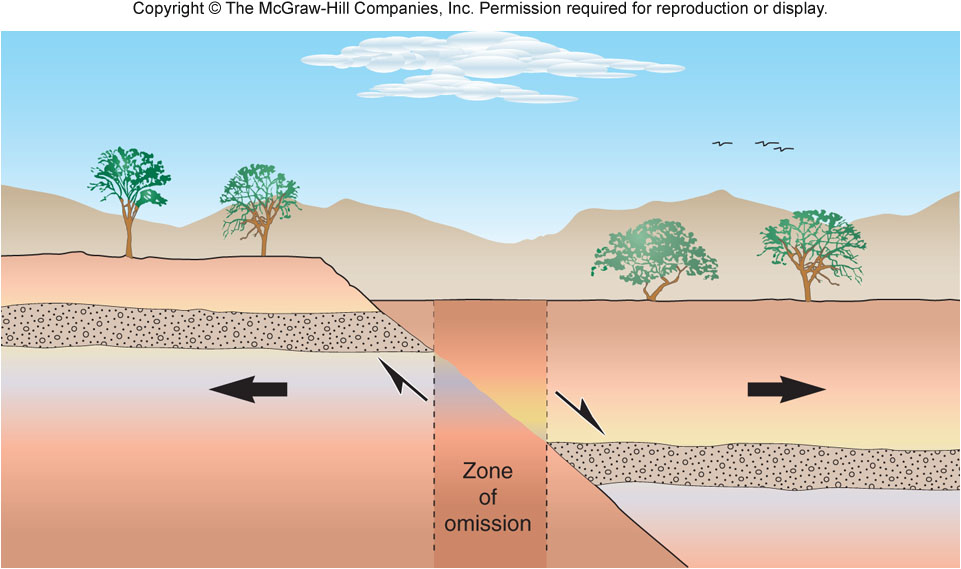
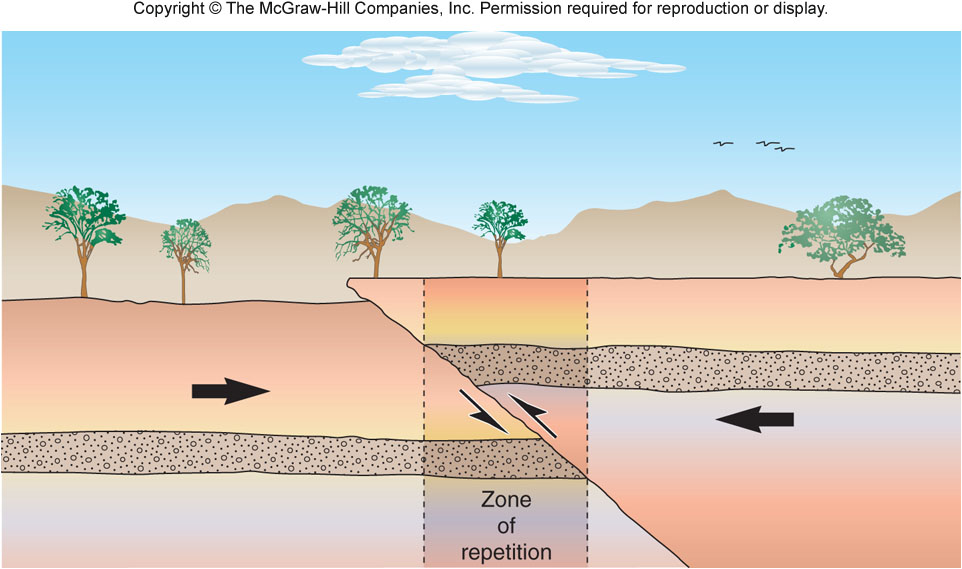
Dip-Slip Faults: normal fault, reverse
fault.
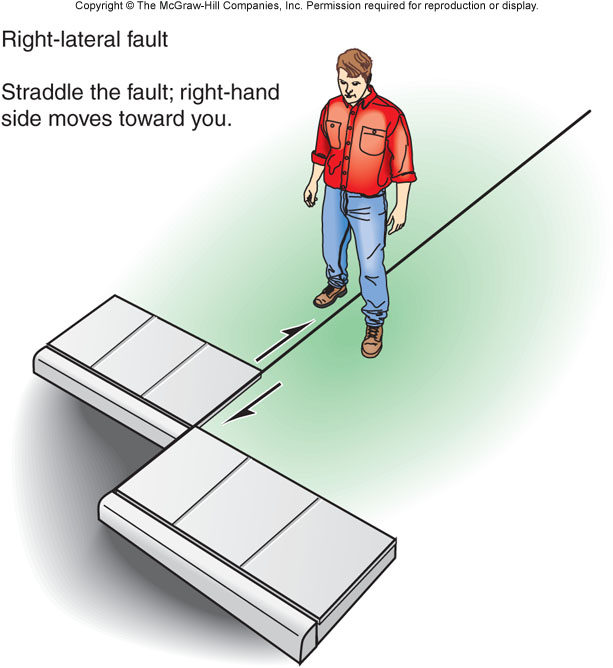
Strike-Slip Fault: right-lateral and left-lateral.
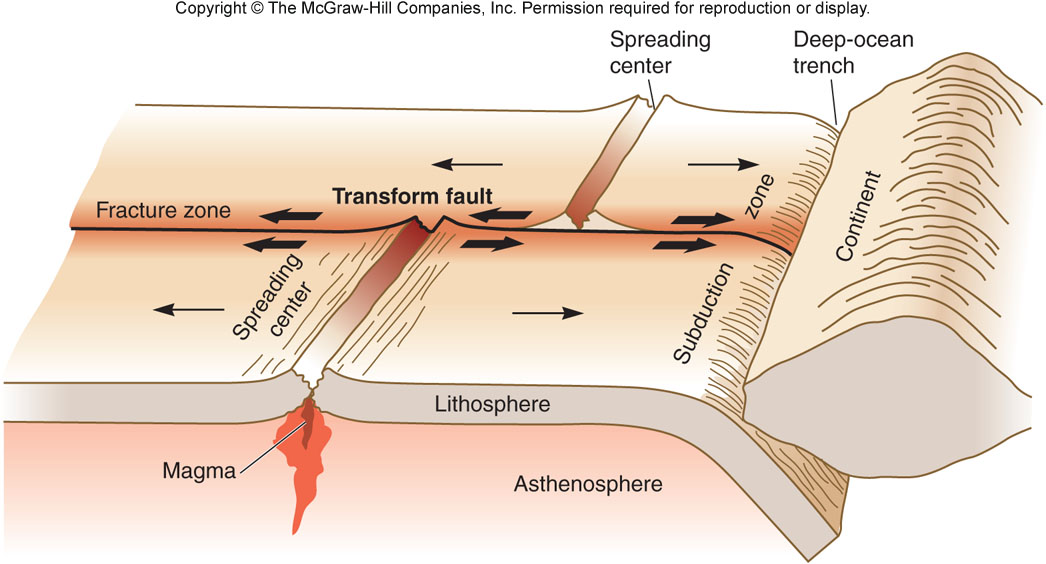
Transform Fault: a special
type of horizontal-movement fault
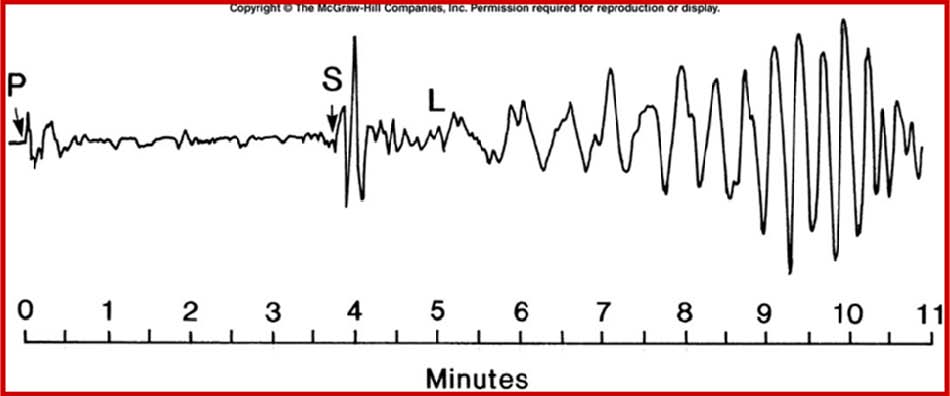
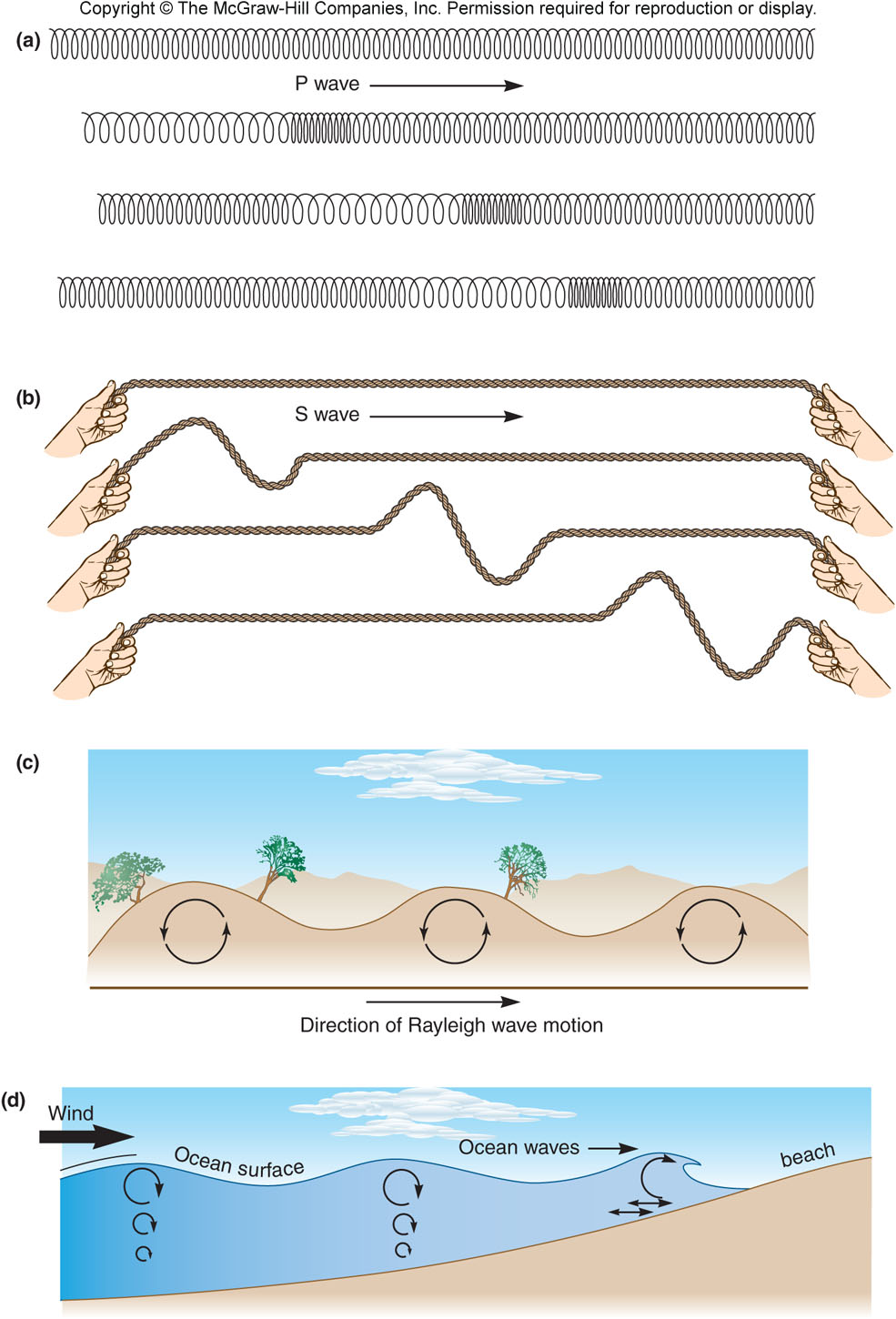
Body Waves (high
frequency; short period; short wavelength):
P-waves: primary; push-pull motion in direction of travel; fastest; arrive first;
propagate through any material (solid, liquid & gas).
S-waves: secondary; “S” transverse motion (up and down); arrive second; propagate only through solids.
Surface (L)
Waves (low frequency; long period, long wavelength):
Love waves: “S” transverse motion (sideways); similar
to “S-waves”, propagate only through solids.
Rayleigh
waves: backward rotating,
elliptical motion like ocean waves; can carry great amounts of energy great
distances; propagate through any material (solid, liquid & gas).
Richter scale (ML): for every magnitude
increase (e.g., 4 to 5), the shaking
amplitude increases by a factor of 10,
whereas the energy released
increases by a factor of 32.
Moment Magnitude (Mw): the most
accurate measure of a large and distant earthquake’s intensity and energy release; the scale most used by seismologists in reporting
worldwide earthquakes.
Key Historical Earthquakes:
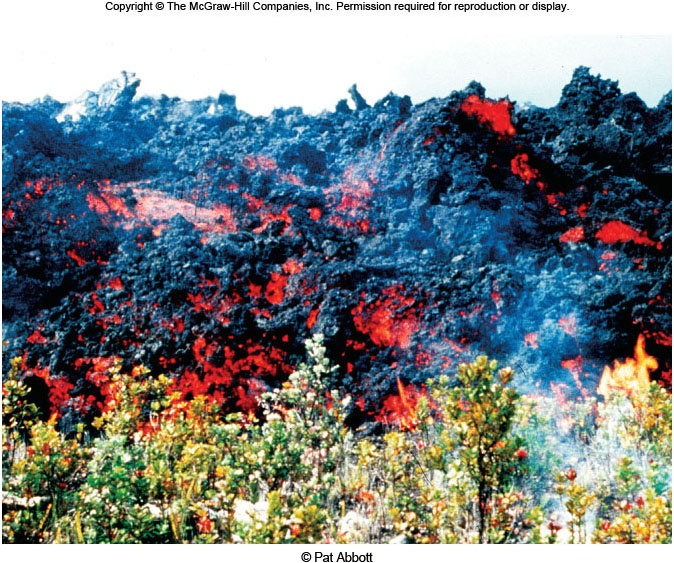
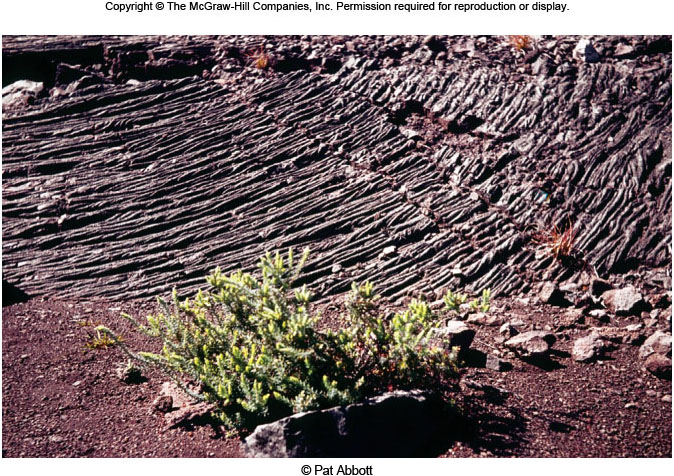
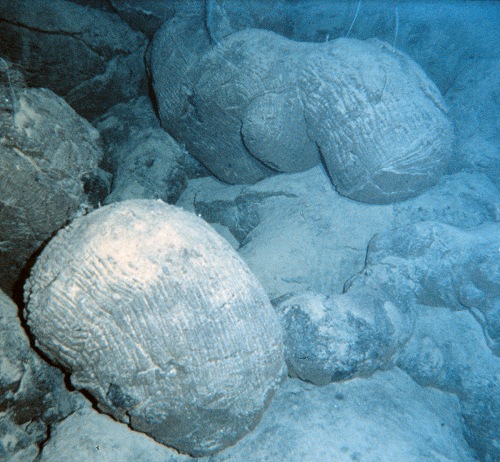
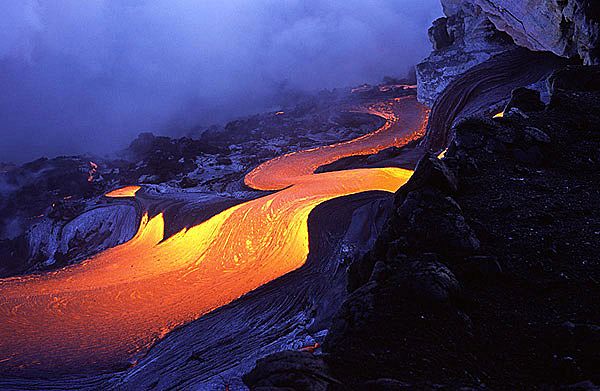
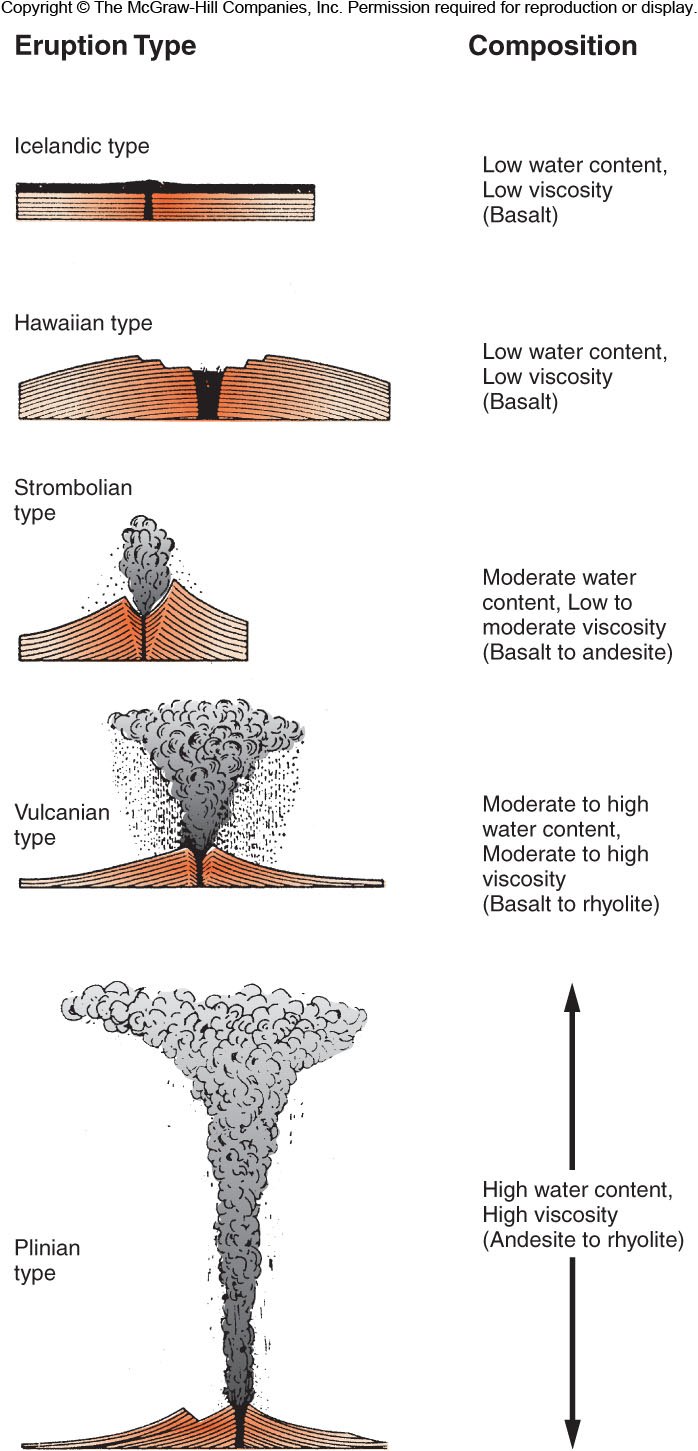
Basaltic Lava Types: aa, pahoehoe, pillow.
Low viscosity (flows
easily, gas escape easy) ===> low silica
content
High viscosity (stickier;
harder to flow; gas escape difficult) ===> high silica
content
Low volatiles (few
dissolved gases) ===> low amounts of H2O,
CO2, SO2
High volatiles (lots of
dissolved gases) ===> high amounts of H2O,
CO2, SO2
Most explosive lava: high silica (high viscosity) and high amounts
of water (high volatiles)
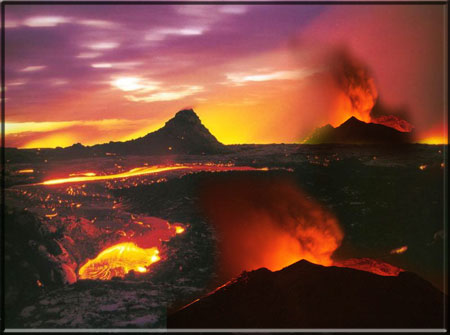
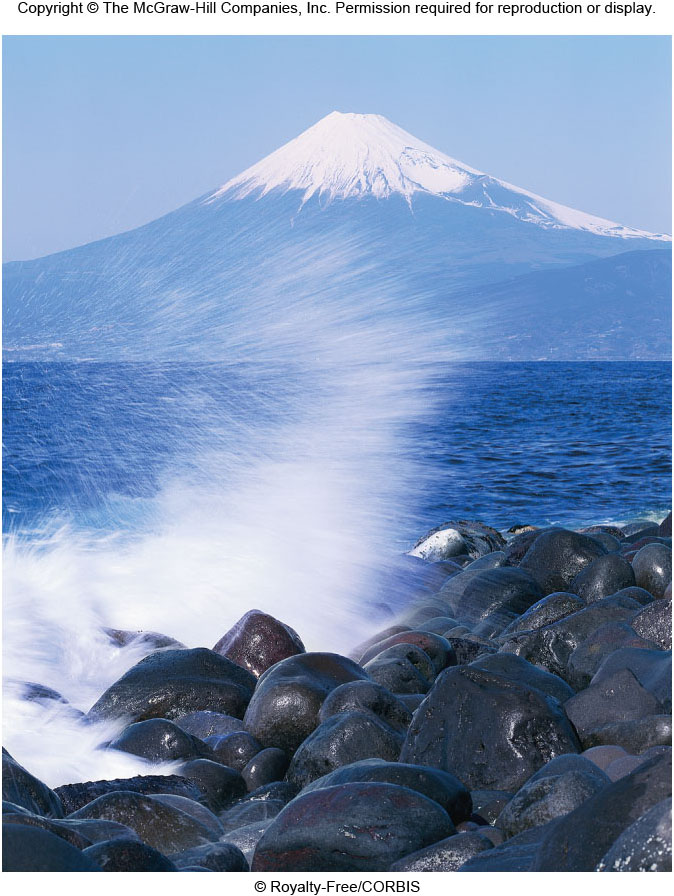
Shield Volcano
(low viscosity; low volatiles; large
volume): wider than it is tall; basaltic lava;
“peaceful” eruptions.
Flood
Basalt (low viscosity; low
volatiles; very large volume): the largest and most dangerous volcanic
events on Earth (linked to mass extinctions).
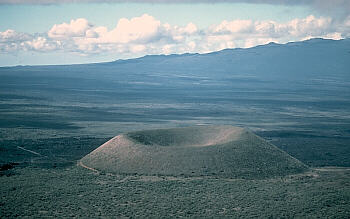
Scoria
(Cinder) Cone (low/medium
viscosity; medium/high volatiles; small volume): conical hills of low
height; basaltic-to-andesitic lava; Strombolian eruptions.
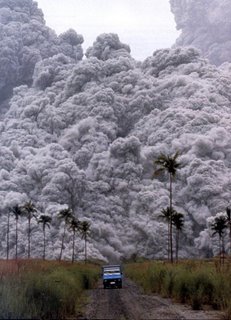
Stratovolcano (medium/high viscosity; medium/high volatiles; large volume): are steep-sided, symmetrical volcanic peaks, with protective caps; andesitic-to-rhyolitic lava; Vulcanian and Plinian eruptions, with deadly pyroclastic flows: , followed by the formation of a lava dome.
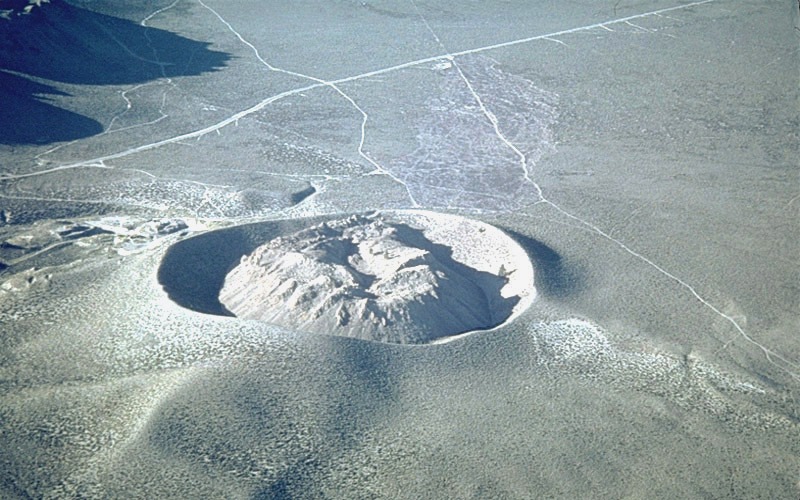
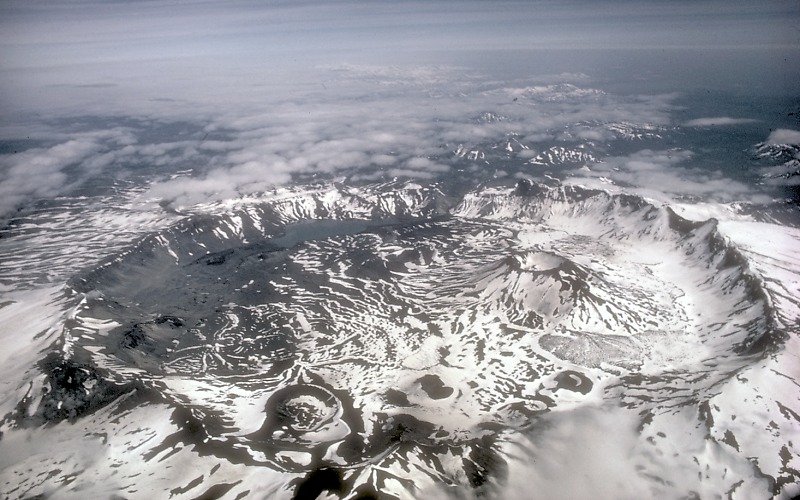
Caldera (high viscosity; high volatiles; very large
volume): giant continental calderas produce the largest
of the violent, explosive volcanic eruptions (Ultra-Plinian), that can
produce catastrophic global climate effects.
Key Historical Volcanic Eruptions: Yellowstone, Toba, Thera (Santorini), Vesuvius,
Tambora, Krakatau, St. Helens, Pinatubo,
♦♦ Be able to identify natural disaster hazards (see below)
in various worldwide city locations (note that blizzards have
been added to “Severe Weather” and Tsunami has been added to the list,
both to be included for the Final Exam):
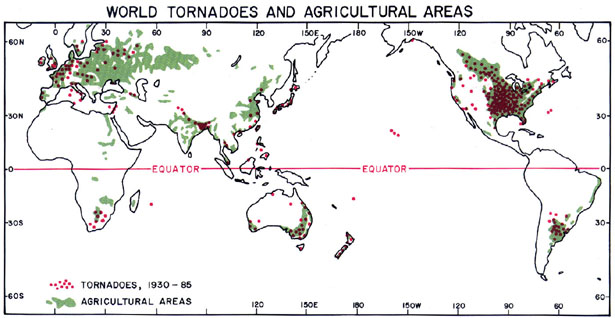
I: Severe Weather
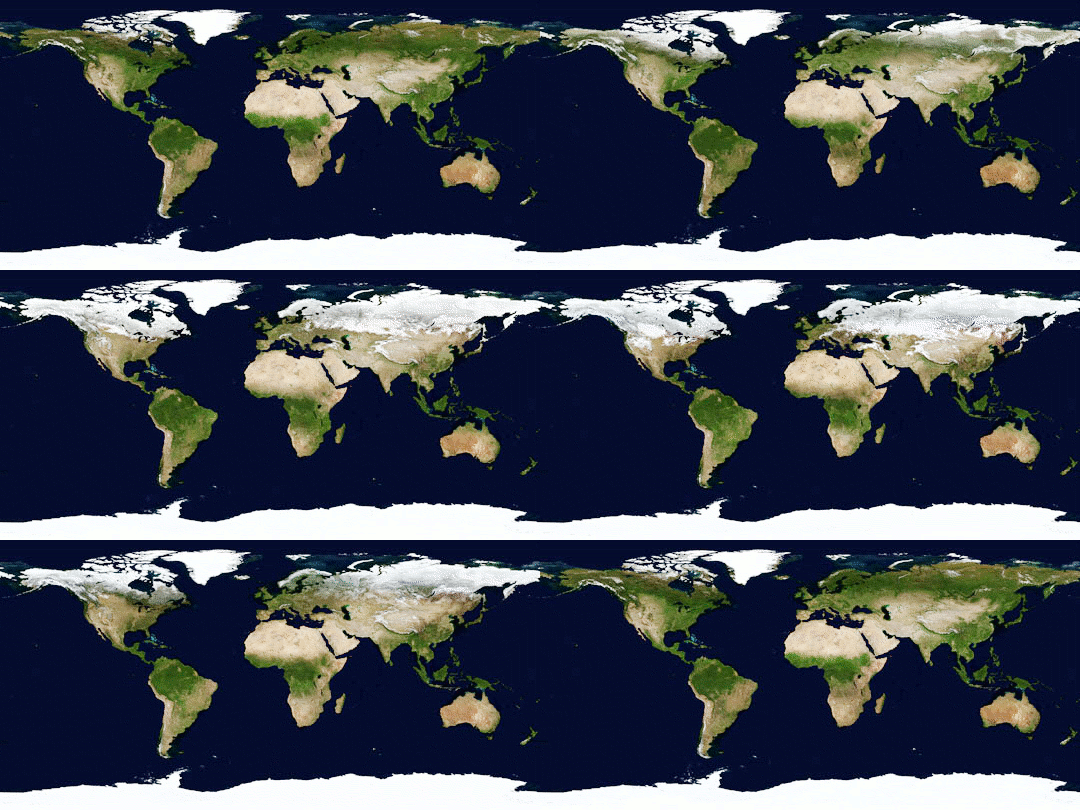
(tornadoes; blizzards wait for
animation)
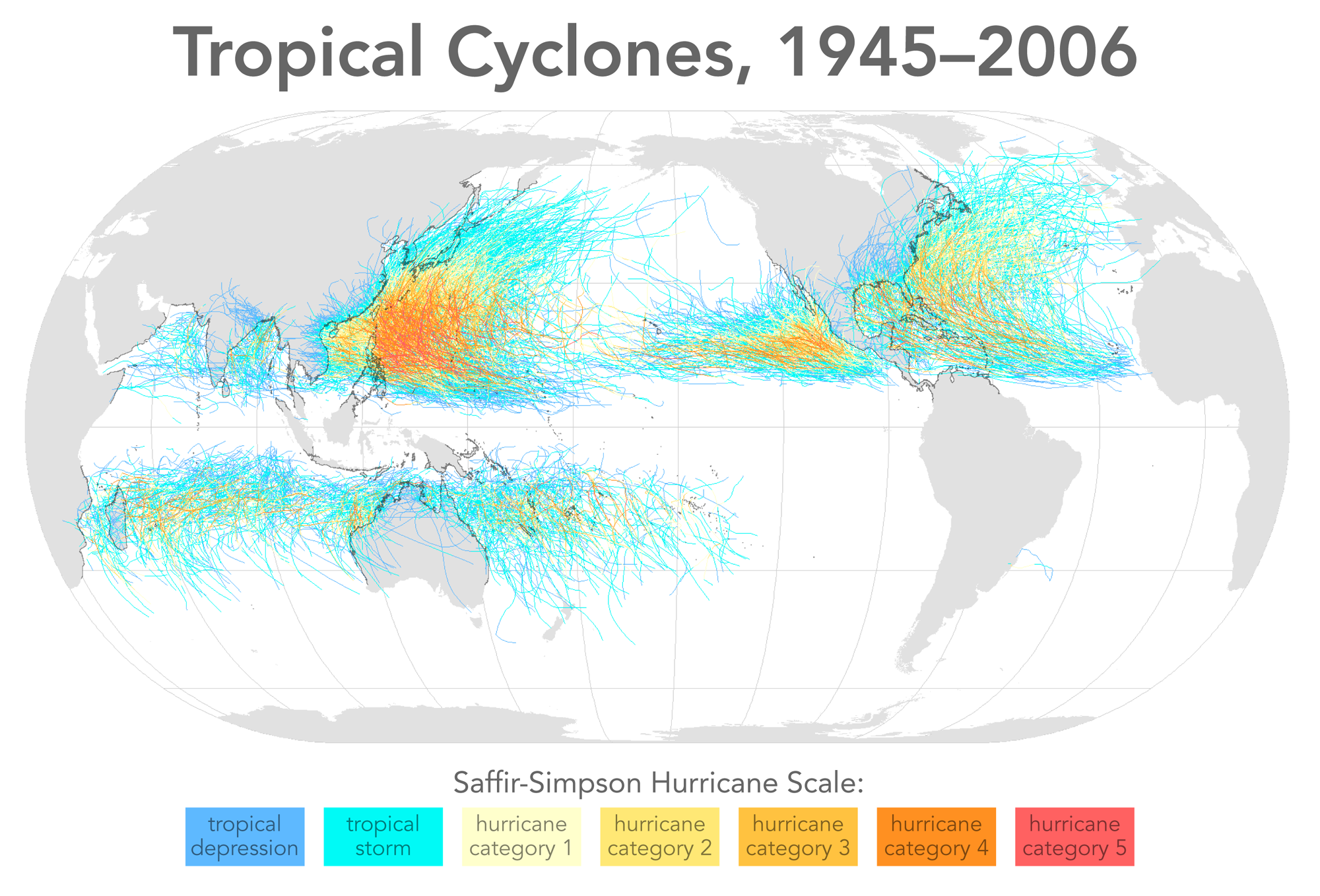
II: Hurricanes (including typhoons, tropical cyclones)
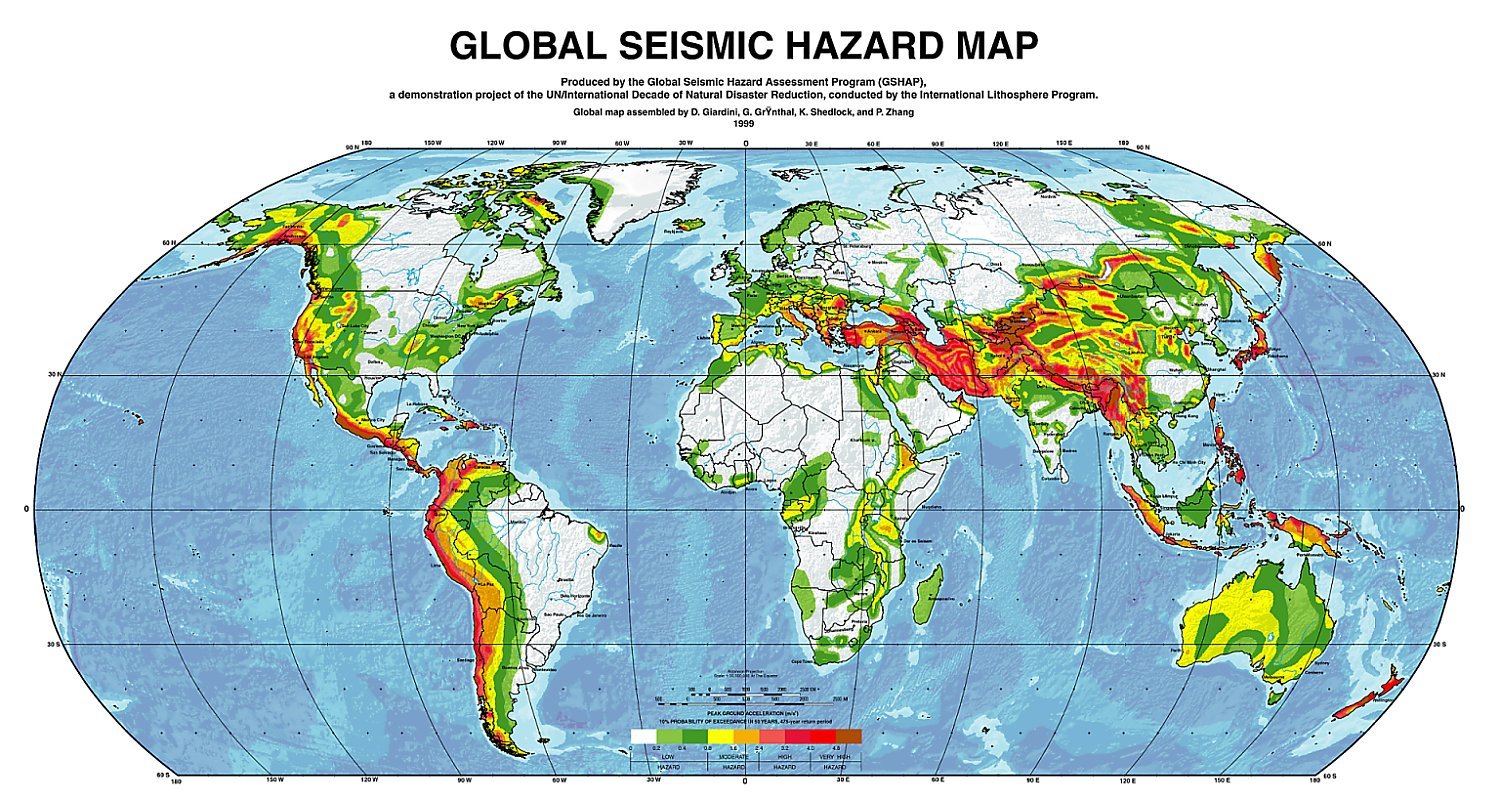
III: Earthquakes
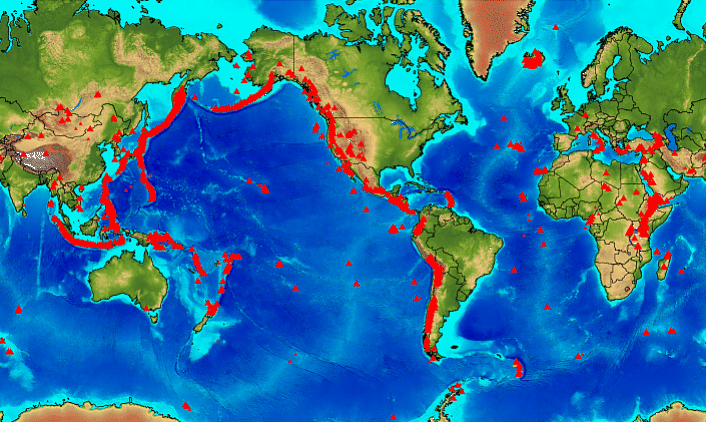
IV: Volcanoes
V: Tsunami (a
threat to any city on an ocean coastline or island, and in the
Mediterranean Sea and