AATM 200 Fall
2015
Exam #3 Most Missed Topic Areas
Below is an outline of the
“most missed” topic areas on Exam #3 based on the entire class. These are the areas you need to review/study
for the upcoming Final Exam.
Note: Review all textbook “Study Guide Material” questions marked with the “†” in blue;
also, review all ♦♦ in the notes, as
well as the Youtube video links on
the Lecture Summaries. Don’t forget the DVD
video “gift” questions. (If you never watched “The Last Extinction”
you *will* want to do so before the Final Exam.)
(For those signed up for Connect Plus, you will want to
review/practice the LearnSmart activities on these topics.)
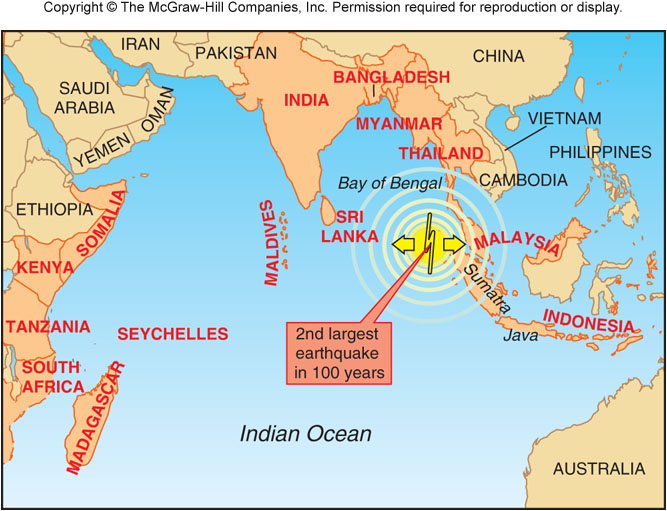
Indian Ocean
Tsunami: The 2004 EQ/Tsunami killed an estimated 245,000
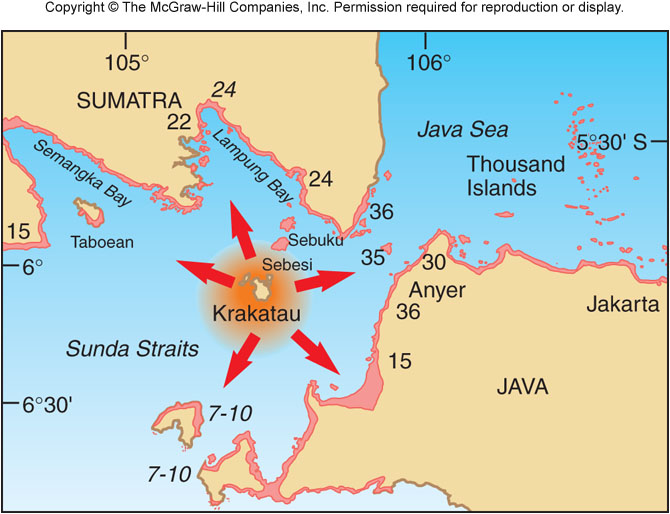
people in 13 countries. The last killer
tsunami in this region was back in 1883, caused by the collapse of
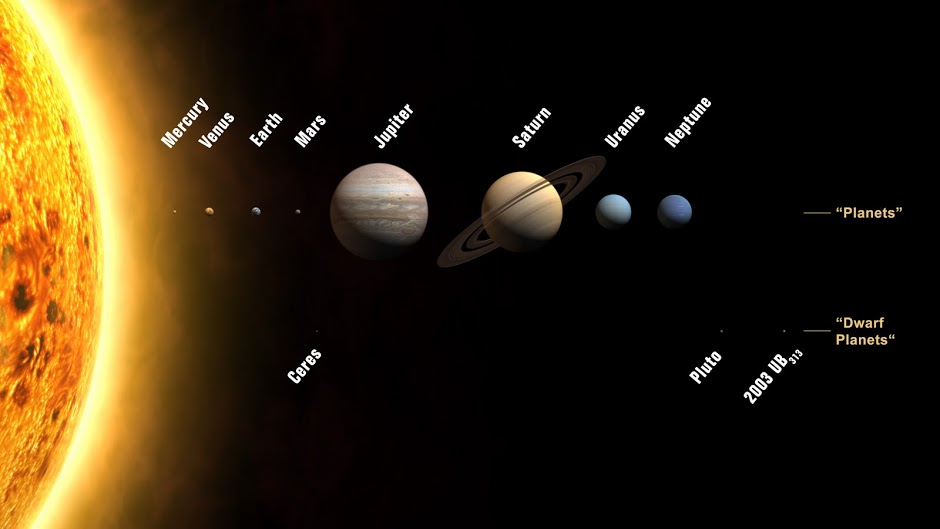
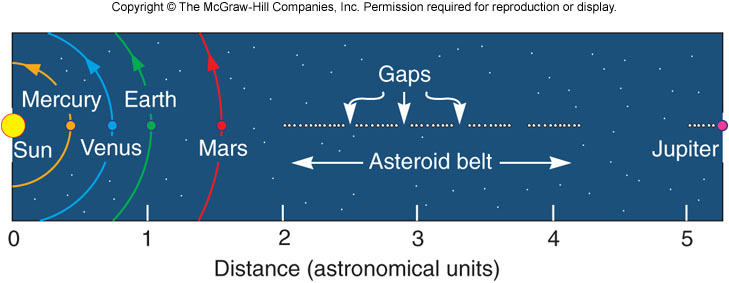
Be able to locate and name
the inner and outer planets of our
solar system, and know the location of the asteroid belt.
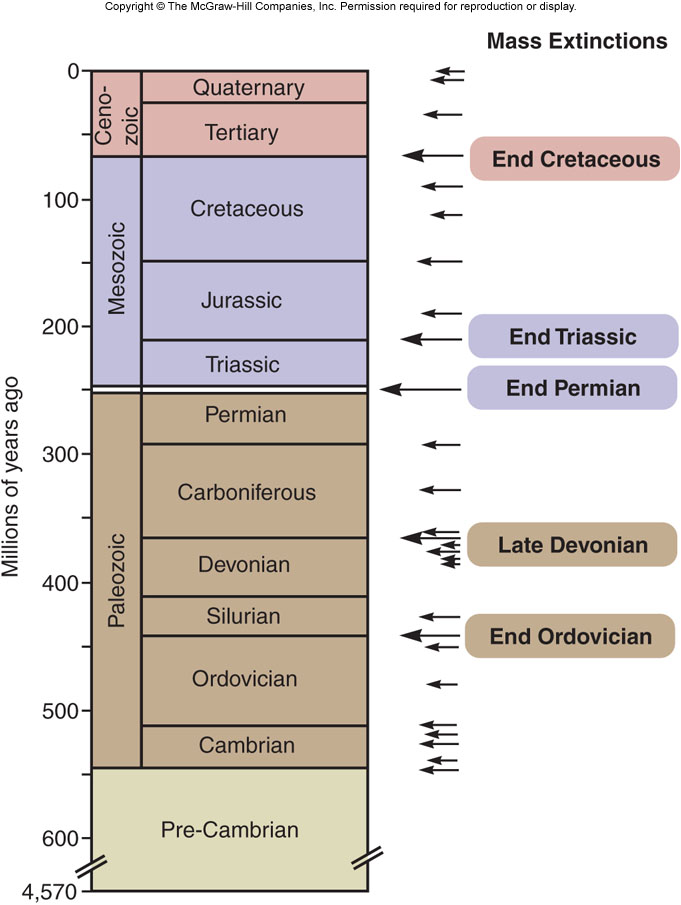
(1) End Ordovician:
3rd largest
overall, 2nd largest marine extinction.
(2) Late Devonian: affected only marine
life (50% extinction).
►
(3) End Permian: Earth’s most severe extinction (95% of
all species) and only known mass extinction of insects; Siberian Traps flood basalt.
(4) End Triassic: CAMP flood basalt; 50% of all
species went extinct.
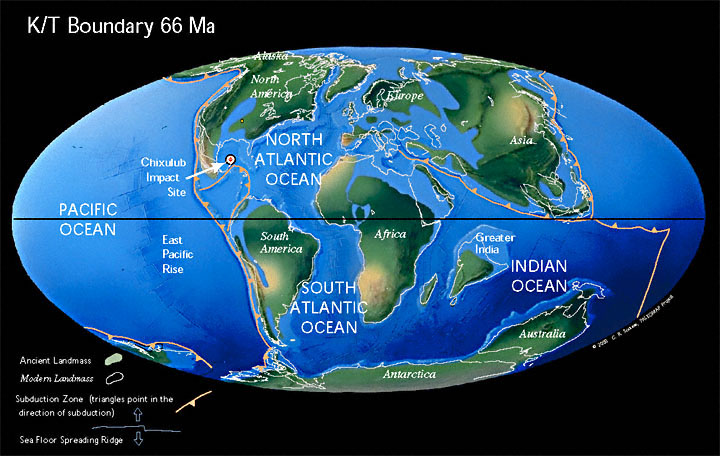
(5) End Cretaceous (K/T): 2nd
largest overall;
►Greenhouse
Extinction: In short, after a sudden increase of carbon dioxide,
CO2 (e.g., flood
basalt eruption), Earth undergoes global warming; after ~5ºC warming, methane, CH4,
is released from frozen gas hydrates, which leads to enhanced global warming;
after ~5ºC additional global warming, the oceans become anoxic (low oxygen); sulfur bacteria produce hydrogen sulfide, H2S,
which poisons
the sea and land, and ultimately destroys the ozone (O3) layer. Result:
mass extinction.
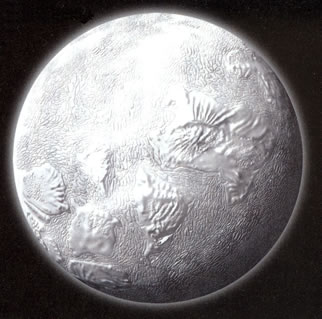
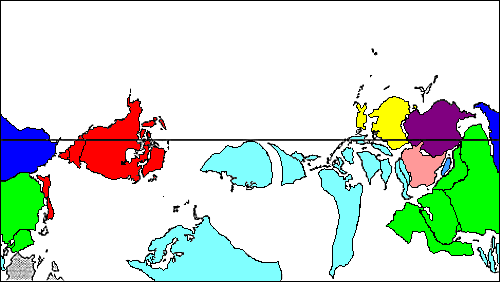
During the “Snowball
Earth” episodes 750 to 650 million years ago, known as the Cryogenian Period, it is believed that
most of the continents were located
around the equator.
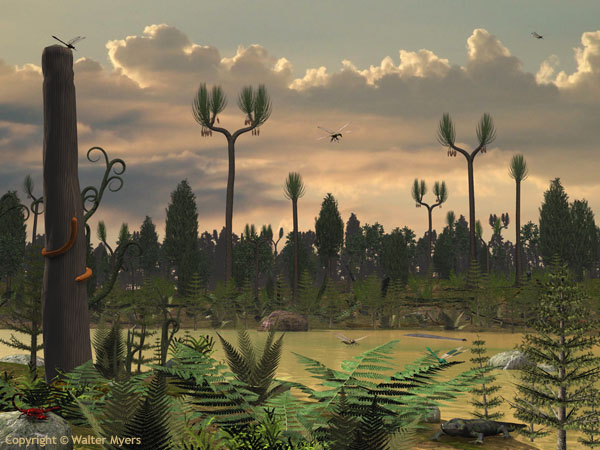
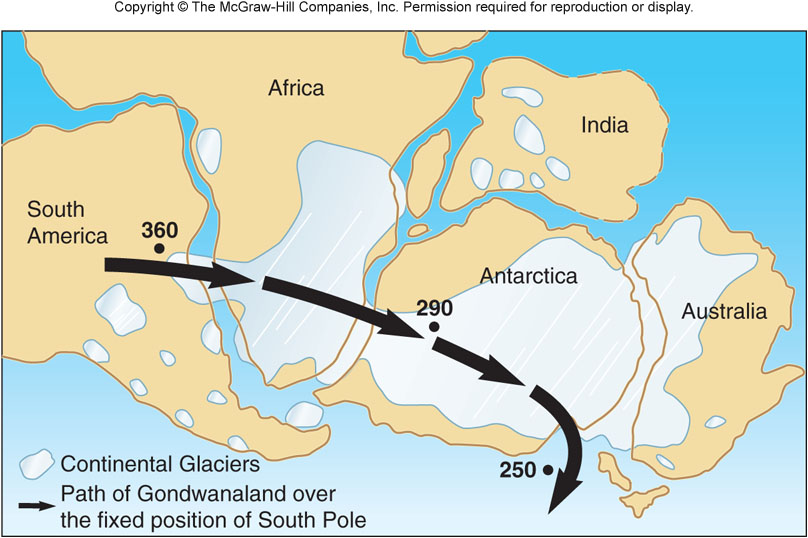
About 300 million years ago,
the Carboniferous Period was
marked by a cold climate due to
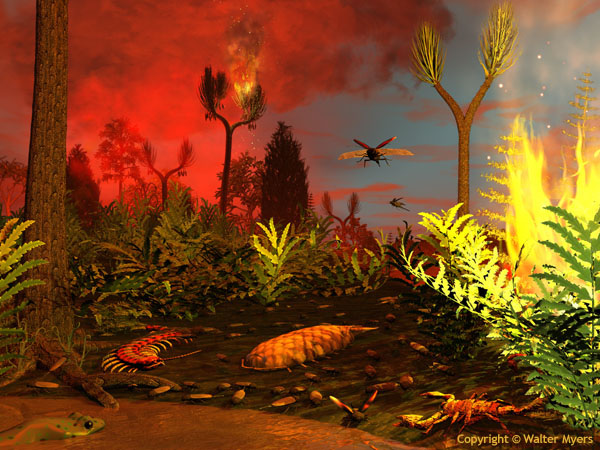
Gondwanaland mostly at the south pole; the high oxygen levels (>30%)
allowed insects to grow to very
large sizes, but also led to many lightning started wildfires.
During the Late Paleocene “Torrid Age” about 55
million years ago, the warming was in part likely due to the equatorial zones largely covered by
oceans, which absorbs solar radiation better than land and thus lowered
Earth’s albedo.
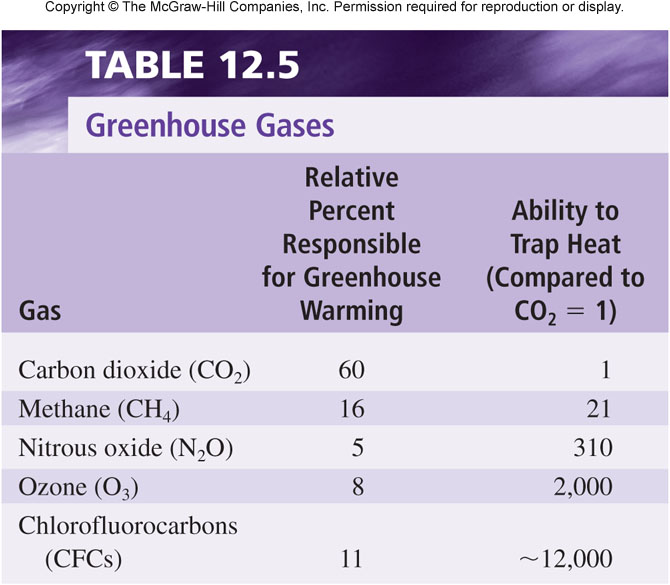
Methane (CH4) is over 20 times more effective global warming gas than carbon dioxide
(CO2).
Anthropogenic Global Warming (AGW): changes in the
mean Earth temperature due to the influence
of humans only (e.g., burning fossil fuels,
industrial pollution, etc.)